
MeshConnect: Empowering Connectivity in Remote Areas with Innovative, Low-Cost Solutions
- Vivian Maria Cezario
- Aug 14, 2025
- 3 min read

1. What is MeshConnect?
MeshConnect is an advanced,
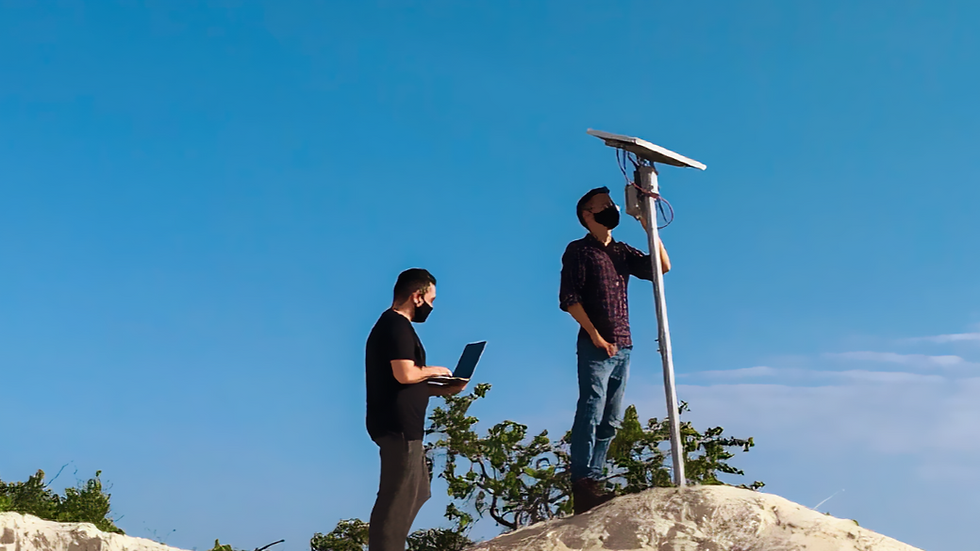
This network enables Internet connectivity in remote and underserved areas. It consists of autonomous nodes (devices) powered by solar energy and batteries, ensuring reliable, off-grid operation. Each node functions as a Wi-Fi access point (AP), allowing end-users to connect their devices easily without additional hardware.
The MeshConnect system routes IP packets through the mesh of LoRa devices to a gateway node, which then links the LoRa network to the Internet. Designed for areas lacking communication infrastructure, the system utilizes low-cost devices like the ESP32 with LoRa and Wi-Fi transceivers. MeshConnect operates independently of the electrical grid, making it a perfect solution for rural areas and emergency scenarios, including natural disasters.
2. Why is MeshConnect Important?
MeshConnect plays a crucial role in addressing the connectivity gap in remote regions, where traditional telecom providers often do not see a feasible economic case for building infrastructure. In Brazil, for example, over 9.5 million people live in areas with no network infrastructure. MeshConnect's mission is to democratize access to the Internet, particularly in areas where essential services like digital education and healthcare are unavailable.
The impact of MeshConnect goes beyond connectivity. Access to the Internet can boost the Human Development Index (HDI) of these regions, attracting telecom providers to invest in infrastructure. Moreover, it enables access to vital digital services, including government programs and widely used platforms like WhatsApp, which is especially important in low-connectivity areas.
3. Potential Applications Beyond the Original Proposal
While MeshConnect was originally designed to provide connectivity in rural and remote areas, its flexibility opens up numerous other applications:
Connectivity in disaster situations: MeshConnect can be used to restore communication services in disaster-affected metropolitan areas. The network's independence from electrical infrastructure makes it highly resilient in emergencies.
IoT monitoring and control: The LoRa network facilitates diverse Internet of Things (IoT) applications, including remote monitoring of sensors in agriculture, smart cities, and energy networks.
Expansion to emerging markets: MeshConnect can be deployed globally, particularly in regions where network infrastructure is limited. Its low-cost, easily replicable design makes it an ideal solution for developing countries, offering scalability and widespread accessibility.
MeshConnect is more than just a connectivity solution; it helps build a more resilient, flexible network infrastructure that adapts to the specific needs of regions where traditional networks are unfeasible.
4. Technology Limitations
While MeshConnect is an innovative, cost-effective solution, there are some inherent limitations to consider:
Low bandwidth: LoRa technology provides limited bandwidth, which restricts the types of applications that can run on the network. It's ideal for text-based communications and low-data tasks like basic web browsing and messaging, but less suitable for transmitting large data files (e.g., videos or high-resolution images).
High latency: Due to the nature of low-power, long-distance data transmission, MeshConnect networks experience higher latency. This latency can increase if data packets need to traverse multiple nodes before reaching the gateway, affecting response times.
User capacity: While designed to support dozens of users in remote areas, each node has a limited capacity for handling multiple simultaneous users. In high-demand situations, network congestion may occur, affecting service quality.
These limitations are important to keep in mind during deployment, particularly in areas with high data traffic or complex use cases.
5. Expanded Projects Based on MeshConnect Technology
Since its original development, MeshConnect has evolved into several innovative use cases and Proofs of Concept (PoC) for different industries. Notable projects include collaborations with Grupo Aço Cearense and ENGIE:
Grupo Aço Cearense: In a PoC with Grupo Aço Cearense (GAC), MeshConnect was tested for providing connectivity in remote industrial areas, assisting in barcode scanning and product tracking across their factory floor. The evaluation confirmed that the network successfully connected GAC’s devices to the MeshConnect nodes. However, due to latency and the bandwidth demand of the barcode reading system, it was recommended that a mobile application be developed to optimize network usage.
ENGIE : Another PoC was carried out with Engie, where MeshConnect was utilized to monitor the temperature of string boxes at a solar energy plant. The solution enabled temperature data transmission via the low-cost wireless network, ensuring the equipment operated within ideal conditions and reducing the risk of failures. This project also led to the creation of SensorMesh, a technology combining MeshConnect's connectivity with real-time monitoring capabilities of various sensors.
6. Useful Links and Technical References
To learn more and access valuable resources related to MeshConnect, please check out the following:
Scientific Article: Delivering WiFi Connectivity to Remote Locations Through LoRa Mesh Networking (publicly available) - Delivering_WiFi_Connectivity_to_Remote_Locations_Through_LoRa_Mesh_Networking.pdf
Presentation of the Scientific Article (2022 IEEE NOMS) (publicly available): 2022-04-27 IEEE NOMS - MeshConnect.pptx


Comments